
Why Expanded States

The brain has a capacity for transformation
that most of us never access.
Not because it isn't available.
Because the conditions required to reach it are rarely created —
and even more rarely held with the skill, safety, and ethical rigor that deep work demands.
Expanded states of consciousness create those conditions.
The Neuroscience
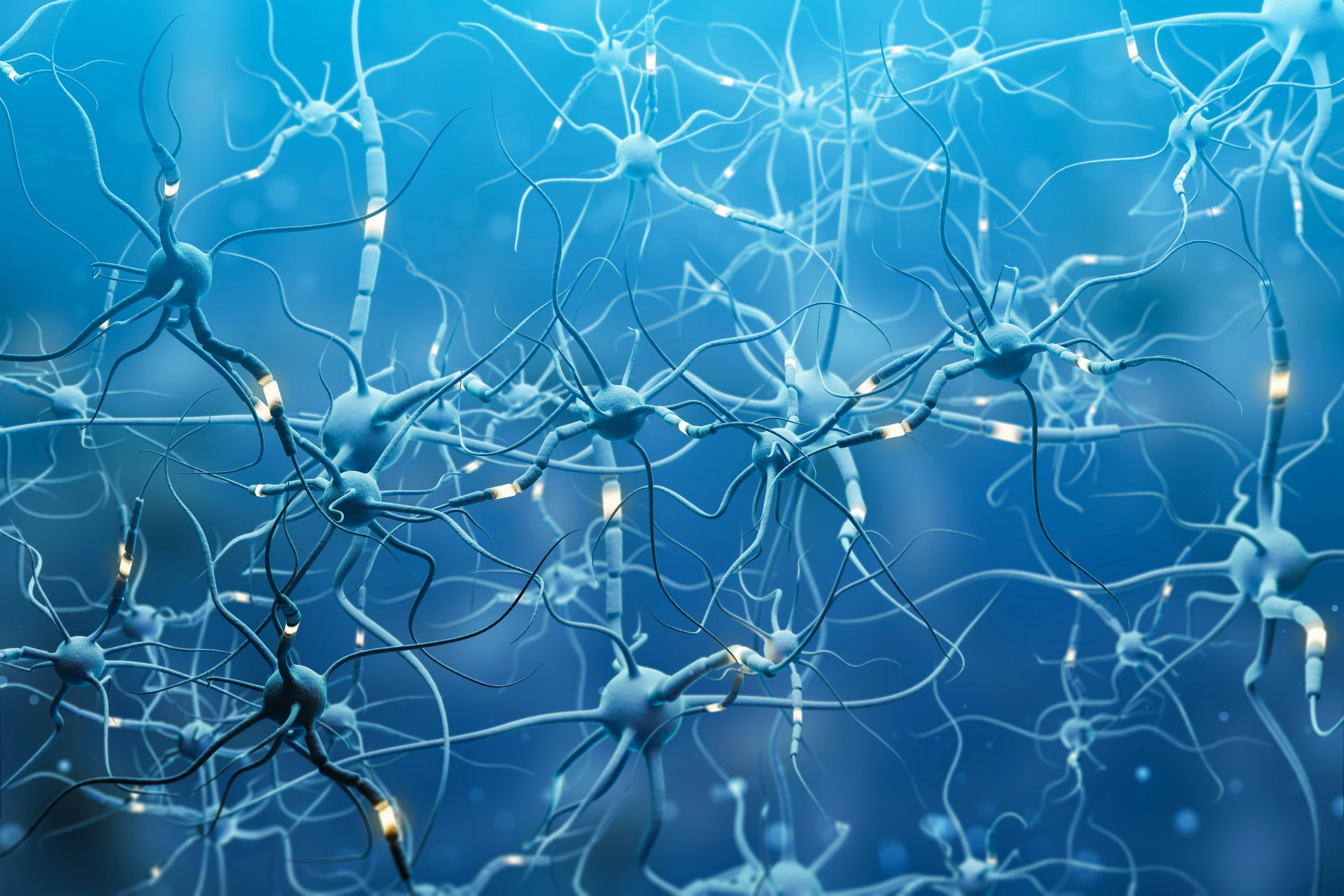
When the nervous system settles into an expanded state, the brain undergoes measurable change. Dominant beta activity — the frequency of analytical thinking and self-monitoring — gives way to theta-range brainwaves, the state associated with creativity, imagery, emotional processing, and memory reconsolidation. Neurochemistry shifts: oxytocin, serotonin, and dopamine increase while cortisol decreases, signaling safety to the entire system.
Most significantly, activity in the Default Mode Network — the neural architecture responsible for habitual self-referential thinking and the ongoing story of "who I am" — quiets. The familiar narrative of identity recedes. Communication between disparate regions of the brain increases. Rigid patterns begin to loosen.
This is the biological substrate of neuroplasticity: the brain's capacity to reorganize, form new connections, and encode new ways of perceiving and being — not through willpower or repetition, but through direct experience at a physiological level.
This is why change accessed in expanded states tends to endure.
The Clinical Frontier
Expanded states research has entered mainstream medicine. The Johns Hopkins Center for Psychedelic and Consciousness Research — where Stanislav Grof served as a Clinical and Research Fellow and later as Chief of Psychiatric Research — is now investigating psilocybin-assisted therapy for conditions including:
Treatment-resistant depression
PTSD
Addiction and alcohol use disorder
Post-treatment Lyme disease syndrome
Alzheimer's disease
Anorexia nervosa
End-of-life anxiety and palliative care
These are not fringe inquiries. They represent some of the most significant unmet needs in modern medicine — conditions where conventional treatment has repeatedly failed patients.
The Bridge:
From Psychedelic Research to Holotropic Breathwork®
Stanislav Grof, M.D., Ph.D., spent fourteen years conducting and overseeing thousands of LSD-assisted psychotherapy sessions — first at the Psychiatric Research Institute in Prague, then at Johns Hopkins University and the Maryland Psychiatric Research Center. He documented, with clinical precision, how expanded states of consciousness could resolve deep and persistent trauma, addiction, existential suffering, and spiritual emergency — territory that conventional psychiatry could not reach.
When psychedelics became illegal in the early 1970s, Grof did not abandon the work. He asked a different question: how do you produce the same therapeutic states without a pharmacological agent?
The answer was Holotropic Breathwork®.
Developed with his wife Christina Grof at the Esalen Institute, Holotropic Breathwork® combines cyclical breathing, evocative music, and a carefully held container to access the same neurological terrain that psychedelic research had mapped. The name itself encodes the intention: from the Greek holos(whole) and trepein(moving toward). Moving toward wholeness.
The method is not a substitute or a workaround. It is a direct, non-pharmacological pathway into expanded states — one rooted in the same research tradition now driving the modern psychedelic renaissance, developed by the psychiatrist who mapped that terrain.
A Personal Note
I came to this work not through intellectual curiosity, but through necessity.
For years, I struggled with something that conventional treatment could not reach. Three inpatient programs. Countless outpatient cycles. Years in AA, working the steps. I tried everything available within conventional frameworks. Nothing held.
One session on a mat with Holotropic Breathwork® changed that. I have not had a drink since. Not through willpower. Not through sustained effort. Through a single expanded state experience that reorganized something at a level conventional treatment had never reached.
I share this not as a testimonial, but as evidence. The neuroplasticity that the research describes is not theoretical. The capacity of expanded states to reach what cognitive intervention cannot — to access and reorganize maladaptive patterns at a physiological level — is something I have lived. It is why I have devoted sixteen years to this work. And it is why I believe, with both intellectual rigor and personal conviction, that expanded states represent one of the most significant frontiers in human health and transformation.
One day can change everything.
What This Means
For individuals: expanded states offer a pathway to durable change — not temporary relief, but genuine reorganization of the patterns that have kept you stuck.
For institutions: the research infrastructure is now in place. The philanthropic capital is moving. The field needs advisors who understand both the science and the institutional dynamics required to build something that lasts.
I sit at that intersection.
For executives, founders, philanthropists, artists, and individuals ready for meaningful interior work — held with discretion, depth, and masterful facilitation.
For universities, research centers, and foundations navigating the philanthropic and institutional complexities of the emerging fields in psychedelic science and consciousness research.
The experiences described on this page reflect individual outcomes and are not guaranteed. Work in expanded states of consciousness is not a substitute for medical or psychological treatment. Spiritus8® does not diagnose, treat, or cure any medical or psychiatric condition. Individuals with significant mental health histories are encouraged to consult with a qualified healthcare provider before participating.